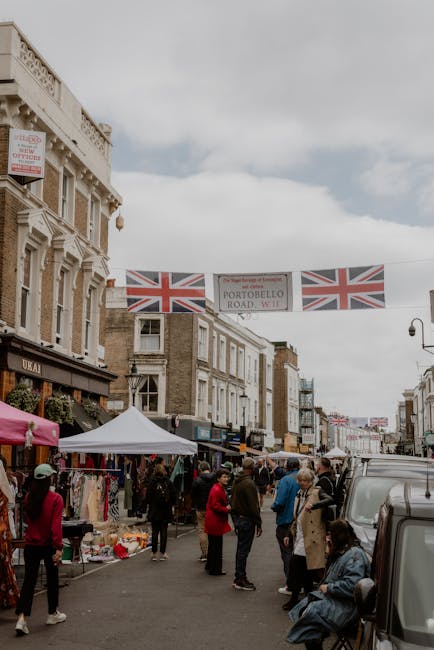
Do I need a permit to sell flowers on Portobello Road?
Posted on 01/06/2026
If you are planning to sell flowers on Portobello Road, the short answer is: very likely yes, you will need permission of some kind before you set up and trade there. The exact permission depends on what you mean by "sell flowers" - a fixed stall, a pitch on the street, a pop-up arrangement, or selling as part of a nearby shop or market operation. That distinction matters more than people expect, and it can be the difference between a smooth start and a very awkward conversation with enforcement officers before lunchtime.
Portobello Road is not a casual, free-for-all trading strip. It is a busy, heavily used London street with established market activity, local rules, and expectations around where and how trading happens. So if you are asking, "Do I need a permit to sell flowers on Portobello Road?" the sensible approach is to assume permission is required unless a specific arrangement says otherwise. In this guide, I will walk through what that means in practical terms, what to check, and how to avoid the common mistakes people make when they jump in too quickly.
For readers who are also planning wider flower sales or delivery in the area, it can help to understand the business side too. If you are building a local flower offer beyond the street itself, pages like flower shops in Notting Hill, flower delivery in Notting Hill, and same-day flower delivery are useful to compare how a local flower business can operate alongside market trading.

Table of Contents
- Why this question matters on Portobello Road
- How flower selling permissions usually work
- Key benefits of doing it properly
- Who needs this information and when it makes sense
- Step-by-step guidance
- Expert tips for a better setup
- Common mistakes to avoid
- Tools, resources and practical recommendations
- Law, compliance and best practice
- Options, methods and comparison table
- Case study or real-world example
- Practical checklist
- Conclusion
- Frequently asked questions
Why Do I need a permit to sell flowers on Portobello Road? Matters
This question matters because street trading in London is not simply about having stock and a nice display. It is about where you are trading, what you are selling, and who has the authority over that space. Portobello Road sits in an area where footfall, traders, residents, and visitors all overlap, which means the rules are there for a reason. To be fair, that is what keeps the place usable for everyone.
Flowers are one of those products that can look wonderfully simple from the outside. A bucket of roses, a neat hand-tied bunch, perhaps some seasonal stems, and you are off. But in reality, even a modest flower stand can raise issues around obstruction, waste, storage, display, pavement space, hours of trade, and customer flow. One day it is a charming stall with fresh scent in the air; the next day it is a complaint about blocked access or unauthorised selling.
If you are thinking commercially, the permit question also affects your business model. A flower seller without the right permission can face interruption, fines, or being told to move on at short notice. That is not just inconvenient. It can ruin stock, damage reputation, and waste setup costs. Let's face it, flowers do not appreciate being moved around in panic.
It also matters for planning. Once you know whether you need a permit, you can decide whether a market pitch, a nearby shopfront, or a delivery-led model makes more sense. In that sense, the permit question is really a business decision disguised as a legal one.
How Do I need a permit to sell flowers on Portobello Road? Works
In practical terms, there are usually three layers to consider:
- Permission to trade in that location - this is the core issue for street or market selling.
- Permission to use the space in a particular way - for example, a pitch, stall, van, temporary display, or pavement use.
- General business compliance - things like trading standards, food-safety-adjacent issues if you add gifts, and proper business records.
On Portobello Road, the location itself is the key point. Some traders operate through established market arrangements, others through nearby shop premises, and some through organised events or temporary permissions. If you are planning to sell flowers on the pavement or from a freestanding stand, you should not assume that a general business licence covers that. Usually, it does not.
If you already run a florist and want to add a visible local presence, the cleaner route may be to use your existing business as a base and focus on online orders, local delivery, and scheduled collections. That is where pages such as our Notting Hill florist service and next-day flower delivery become relevant. A hybrid model often gives you far fewer headaches than trying to improvise on the street.
It is also worth understanding that "permit" is sometimes used loosely. People may mean a stall licence, a pitch agreement, a pavement consent, or a market trader permit. The words are not always interchangeable. If you are speaking to an organiser or local authority, ask for the exact name of the permission needed, and ask what it covers: times, pitch boundaries, stock type, and whether you can display buckets, signage, or a small gazebo.
What you should clarify before you trade
- Is the selling spot part of an organised market or a public street?
- Are you trading from a fixed stall, a trolley, a table, or a handheld setup?
- Is the activity one-off, seasonal, or regular?
- Can you store flowers on-site, or only display what is immediately needed?
- Are there restrictions on structures, umbrellas, signage, or waste bins?
Those are the boring questions, yes, but they are the ones that save you the most trouble.
Key Benefits and Practical Advantages
Getting the correct permission may feel like a hurdle, but it brings a lot of upside. The biggest benefit is simple: certainty. When your trading position is clear, you can focus on selling, not worrying about being challenged mid-shift.
Here is what proper permission usually gives you in real life:
- Predictability - you know where you stand and what you can do.
- Better customer confidence - people trust a setup that looks legitimate and organised.
- Less risk of disruption - no last-minute scramble if someone questions your pitch.
- Cleaner planning - you can judge stock levels, staffing, and transport more accurately.
- More room to build a brand - especially if you want repeat trade rather than one-off selling.
There is also a quality-of-life benefit that people sometimes underestimate: fewer small, annoying decisions on the day. If you have ever stood in cold wind at 7:30 a.m. wondering whether your arrangement will survive another gust, you know that simplicity is underrated.
For a flower business, being compliant can also support wider services. A trader who is properly set up can often integrate street visibility with other revenue streams such as sending flowers locally, building a stronger catalogue through best flower delivery options, or offering low-cost seasonal bunches through cheap flowers in Notting Hill.
Who This Is For and When It Makes Sense
This guidance is useful for a few different people, and the right answer changes slightly depending on your setup.
1. First-time flower sellers
If you are testing the waters with a small flower stand, the permit question should be your first checkpoint, not your last. A surprising number of people buy stock first and ask about permissions later. That is backwards, and usually expensive.
2. Market traders expanding into flowers
If you already trade at markets or fairs and want to add flowers, check whether your existing arrangement allows that product category. Some pitches are flexible; others are not. Flowers can have extra handling or display expectations, especially if you are adding buckets of water, wrapping, or ancillary gifts.
3. Florists seeking local visibility
If you already run a nearby florist and want Portobello Road foot traffic, the question is really about whether a visible pitch complements your existing operation or distracts from it. Often, a delivery-focused model is cleaner. For example, a flower shop might do better promoting local flower shop services and delivery in Notting Hill than chasing a patch of pavement trading.
4. Event sellers and seasonal traders
If you are selling flowers for a weekend event, wedding, celebration, or seasonal rush, you still need to check the permission structure. Temporary does not automatically mean exempt. In fact, temporary setups are where people most often trip up because they assume "just for today" means no paperwork. It rarely works that way.
5. Businesses adding flowers as a side line
Some gift businesses want to add bouquets, stems, or floral add-ons. That can be a smart move. It can also create compliance complexity if the flowers are sold from a stall or street display rather than a shop or online order flow. If that is you, it may be worth aligning with an established florist structure rather than ad hoc selling.
Step-by-Step Guidance
If you want a practical path forward, here is the sequence I would use.
- Define your exact trading model. Are you selling from a stall, a table, a fixed shopfront, a van, or a temporary pitch?
- Identify the exact location. "Portobello Road" is helpful for conversation, but the permission often depends on the precise stretch and side of the road.
- Ask what permission is required. Use clear wording: do you need a stall licence, pitch agreement, market trader permit, or pavement-related permission?
- Check the conditions. Look at days, hours, stall size, cleanup duties, display limits, and whether flowers need to be kept in water.
- Budget for setup and ongoing costs. The fee is not the only cost; transport, refrigeration, wrapping, and waste removal matter too.
- Prepare your operation. Make sure your buckets, flowers, signage, and payment methods are ready before the first trading day.
- Keep written records. Save agreements, emails, and receipts. A paper trail is boring right up until it is essential.
If your plan is to trade regularly, I would also suggest thinking in terms of resilience. What happens if it rains? What if your roses arrive a little late? What if you sell through faster than expected? Having backup stock and a simple restock plan matters more than people think.
That is especially true for flowers by the stem. Roses, lilies, carnations, chrysanthemums, alstroemeria, and mixed hand-tied bunches all behave differently in display. If you are building a broader offer, it may help to explore product pages such as roses, lilies, carnations, and mixed colours to think through stock style, not just legality.
Expert Tips for Better Results
Here is the part people usually want the most: how to make the whole thing easier.
Keep your setup lightweight but professional
Flowers sell better when they look fresh and easy to browse. Do not overpack a pitch with too many varieties. Two or three clear ranges often work better than a chaotic rainbow of stems that looks lovely but feels impossible to manage.
Think like a customer walking past at speed
Portobello Road foot traffic is often moving, glancing, deciding in seconds. Your display should answer three questions quickly: what is it, how much is it, and is it worth stopping for? A neat handwritten sign can do a lot of work.
Build for weather, not just aesthetics
London weather can turn in a heartbeat. A bright morning can become a damp, blustery afternoon by 2 p.m. Have covers, weights, and water protection ready. If you have ever seen a perfect bouquet get flattened by one rogue gust, you will know what I mean.
Use the permit as a planning tool, not just a formality
Once you know the allowed times and pitch rules, build your ordering and bouquet prep around them. That can reduce waste and help you choose the right product mix. For example, if footfall peaks later in the day, do you need stronger, longer-lasting stock rather than delicate early-morning flowers?
Link street selling to a broader offer
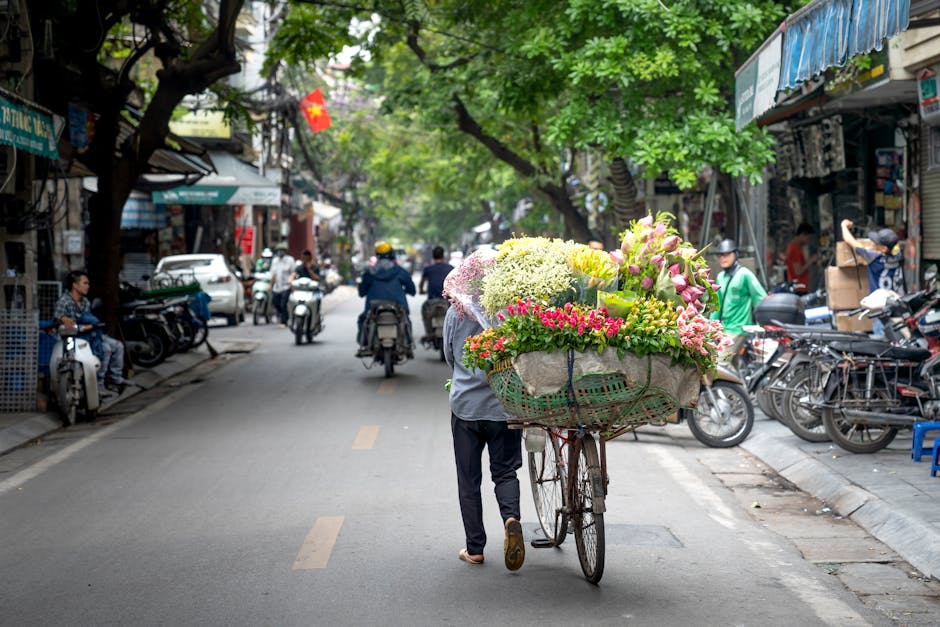
One of the smartest moves is to use local selling to support an online and delivery model rather than treating them as separate worlds. A customer who sees your flowers on Portobello Road may later order a birthday bouquet, sympathy arrangement, or wedding piece online. That is where a broader service range comes in handy, such as birthday flowers, funeral flowers, and wedding flowers.
Common Mistakes to Avoid
There are a few predictable errors that can trip up even sensible sellers. Knowing them upfront saves time, money, and a fair amount of embarrassment.
- Assuming "market area" means permission. It often does not. Always check the exact arrangement.
- Thinking a private arrangement covers public trading. A shop lease or vendor relationship is not the same as street permission.
- Setting up before confirmation. That is the classic mistake. People get excited, then regret it.
- Ignoring display limits. A stall that sticks out too far or blocks access can become a problem fast.
- Forgetting cleanup responsibilities. Water spills, stems, wrap, and broken packaging matter more than you think.
- Buying too much stock for uncertain trade. Fresh flowers are not a warehouse product. Overbuying is risky.
Another subtle mistake is treating the permit as the only issue. It is important, yes. But your pricing, stock rotation, wrapping, and payment flow matter just as much. A perfectly legal pitch can still be a poor business if the product looks tired or the offer is unclear.
Tools, Resources and Recommendations
You do not need fancy systems to get started, but a few simple tools help a lot.
- Pitch notes or a trading folder for keeping permission paperwork in one place.
- Weatherproof display covers for protecting stock during showers or wind.
- Bucket markers or labels if you are displaying different stem types or prices.
- Basic card payment setup so you are not relying entirely on cash.
- Simple waste bags and cleanup supplies to keep the area tidy.
If you are planning to sell flowers more broadly in the area, it can also help to review useful site pages that explain service expectations and trust signals. For example, about us, guarantees, returns and refund, and delivery can all support a more professional customer journey.
For customers who want broader product browsing, supporting pages like all flowers, best sellers, and any occasion can also help you understand what sells naturally beyond the stall itself.
Law, Compliance, Standards, or Best Practice
Because this topic touches public trading and local permissions, you should treat compliance carefully. I am keeping this plain-English rather than legalistic, but the principle is simple: do not trade publicly unless you know the exact permission you need and what it covers.
Best practice usually means:
- having clear written approval for the location and trading type;
- sticking to the agreed pitch boundaries;
- keeping walkways clear;
- managing waste and water responsibly;
- using honest pricing and product descriptions;
- and maintaining decent standards of presentation and hygiene.
If you add extras such as gift wrap, cards, balloons, or mixed gift items, make sure you understand any additional selling conditions. For a florist business, a clean compliance setup also protects the customer experience. The more consistent you are, the less room there is for awkward misunderstandings.
One practical standard worth following is to keep flowers fresh and visible without overcrowding pedestrians. That seems obvious, but it is where many public trading issues begin. Another is to keep communication polite and clear if someone asks about your permission. A calm answer usually goes a long way. Honestly, it is amazing how far a friendly tone can carry you in London.
Options, Methods, or Comparison Table
If you are deciding how to sell flowers around Portobello Road, it helps to compare the main options side by side.
| Method | What it looks like | Permission pressure | Best for | Main downside |
|---|---|---|---|---|
| Street stall or pitch | Visible public display, footfall-driven sales | High | Impulse purchases and direct visibility | Most likely to need formal permission |
| Market trading arrangement | Organised pitch within a managed market setting | Medium to high | Regular trade with clearer rules | Availability and conditions can be strict |
| Shopfront florist | Fixed premises with window display | Lower for selling itself, but still regulated | Stable, repeatable business | Higher overheads |
| Delivery-led florist business | Orders taken online or by phone, then delivered | Lower for public trading | Broader reach and cleaner operations | Less street visibility |
In many cases, the delivery-led model ends up being the simplest way to serve the same local audience without the same public-trading complexity. That is especially true if your real goal is sales, not necessarily a physical presence on the pavement.
Case Study or Real-World Example
Picture a florist who wants to test weekend sales with a compact flower setup near Portobello Road. The first instinct might be to bring a few buckets of roses and mixed seasonal stems, stand near passing footfall, and see what happens. It sounds straightforward. It is not.
Before they start, they need to know whether the spot is part of a permitted market pitch, a trader-managed area, or simply a public pavement where selling is restricted. Once they check, they may discover that the best option is actually not a street stall at all. Instead, they could use a nearby base, focus on delivery, and promote a small selection of hand-tied bouquets and occasion flowers online.
That shift changes everything. Instead of worrying about pitch enforcement, they can spend time on product quality: a few reliable best sellers, some seasonal bunches, a tidy card add-on, and maybe a same-day option for local customers. The business becomes calmer. Fewer moving parts. Less drama. More actual selling.
And honestly, that is often the smart move. Street trade looks romantic from the outside, especially on a charming London road with people browsing and bags in hand. But once you factor in permissions, weather, stock handling, and daily setup, a lot of sellers find that a delivery-first model gives them a much steadier income base.
Practical Checklist
Use this checklist before you make plans to sell flowers on Portobello Road.
- Have I defined exactly how I will sell - stall, pitch, shopfront, or delivery-led?
- Do I know the precise location and side of the road?
- Have I confirmed whether permission is required?
- Do I understand the pitch boundaries and trading hours?
- Have I checked whether flowers, signage, and display items are allowed?
- Do I have a cleanup plan for water, waste, and packaging?
- Is my pricing clear and visible?
- Do I have a payment method ready?
- Have I planned for rain, wind, and hot weather?
- Am I keeping records of approval and costs?
- Would a shopfront or delivery model make more sense for my business?
If most of those answers are still fuzzy, pause and tidy them up first. That one hour of planning can save you a whole day of stress later.
Conclusion
So, do you need a permit to sell flowers on Portobello Road? In most practical cases, yes - or at least some form of explicit permission. The exact type depends on your setup, the location, and whether you are trading through a market arrangement, a stall, a pitch, or a more permanent business base. The safest answer is not to guess.
If you are serious about selling flowers there, take the time to define your model, confirm the correct approval, and build your offer around the real conditions of the street. That is how you avoid frustration and build something that lasts. And if your goal is broader local floral trade rather than one-off street selling, a delivery-led or shop-led model may be the smoother path.
Flowers should feel beautiful, not complicated. Once the paperwork is sorted, the rest can be genuinely enjoyable - arranging stems, greeting customers, watching someone stop and smile at a perfect bunch on a busy London morning. That part never really gets old.
Get a free quote today and see how much you can save.
Frequently Asked Questions
Do I need a permit to sell flowers on Portobello Road as a one-off?
Usually, yes, you should expect to need some kind of permission even for a one-off setup. Temporary selling is not automatically exempt just because it is short-term. Check the exact arrangement before you buy stock.
Is a market pitch the same as a street trading permit?
Not always. A market pitch, stall licence, and street trading permission can be different things with different conditions. Ask for the exact name of the permission you need.
Can I sell flowers from the pavement without permission if I only use a small table?
No, size alone does not make it exempt. A small table can still count as public trading, and you may still need permission. The key issue is the activity and location, not just the footprint.
What if I am selling flowers from my own nearby shop?
That is different from selling on the street. A fixed shopfront usually has a simpler setup for selling flowers, but you still need to follow normal business rules and any local conditions that apply to the premises.
Does selling bouquets online change the permit issue?
Yes, in a good way. If you sell online and deliver locally, you may avoid the complexities of public street trading. That is why many florists lean into send flowers and delivery-led models instead.
Can I trade on Portobello Road every weekend if I have permission once?
Not necessarily. Some permissions are date-specific, some are regular, and some are conditional. Always check whether the approval is for a single day, a repeating pitch, or a longer trading arrangement.
What flowers are best for a small street stall?
Usually, compact and robust stems work best: roses, carnations, alstroemeria, chrysanthemums, and mixed hand-tied bouquets. They are easier to display and usually hold up better than delicate blooms in changing weather.
How much stock should I bring to a first trading day?
Keep it modest. You want enough variety to look attractive, but not so much that you are left with tired stock at the end of the day. Start smaller than you think, then adjust.
What should I ask the organiser or authority before I start?
Ask what exact permission is required, what the pitch boundaries are, what hours you can trade, whether structures are allowed, and what cleanup rules apply. Those questions cover most of the practical risk.
Is there a cheaper way to serve the same Portobello Road customer base?
Yes. A delivery-led business can often be much more economical than public trading. Pages like cheap flowers and next-day flower delivery can help you build that offer without relying on a street pitch.
Can I combine flower selling with gift items like cards or chocolate?
You can, but check whether your trading permission covers the full product mix. Mixed-product stalls can be great, yet they may bring extra conditions around display, stock, or resale setup.
What is the safest first step if I am unsure?
Do not set up and hope for the best. Define your exact trading model, confirm the permission required, and keep everything in writing. A little caution here is worth it.